
Future of Work · Behavioural Insight · Employee Experience
WorkWave — Exploring Sustainable Work Patterns
Context
Modern knowledge work generates signals around workload, meetings, focus and work rhythms, but those signals can easily become intrusive or difficult to interpret.
Scope
Exploratory behavioural-product concept using public illustrative data.
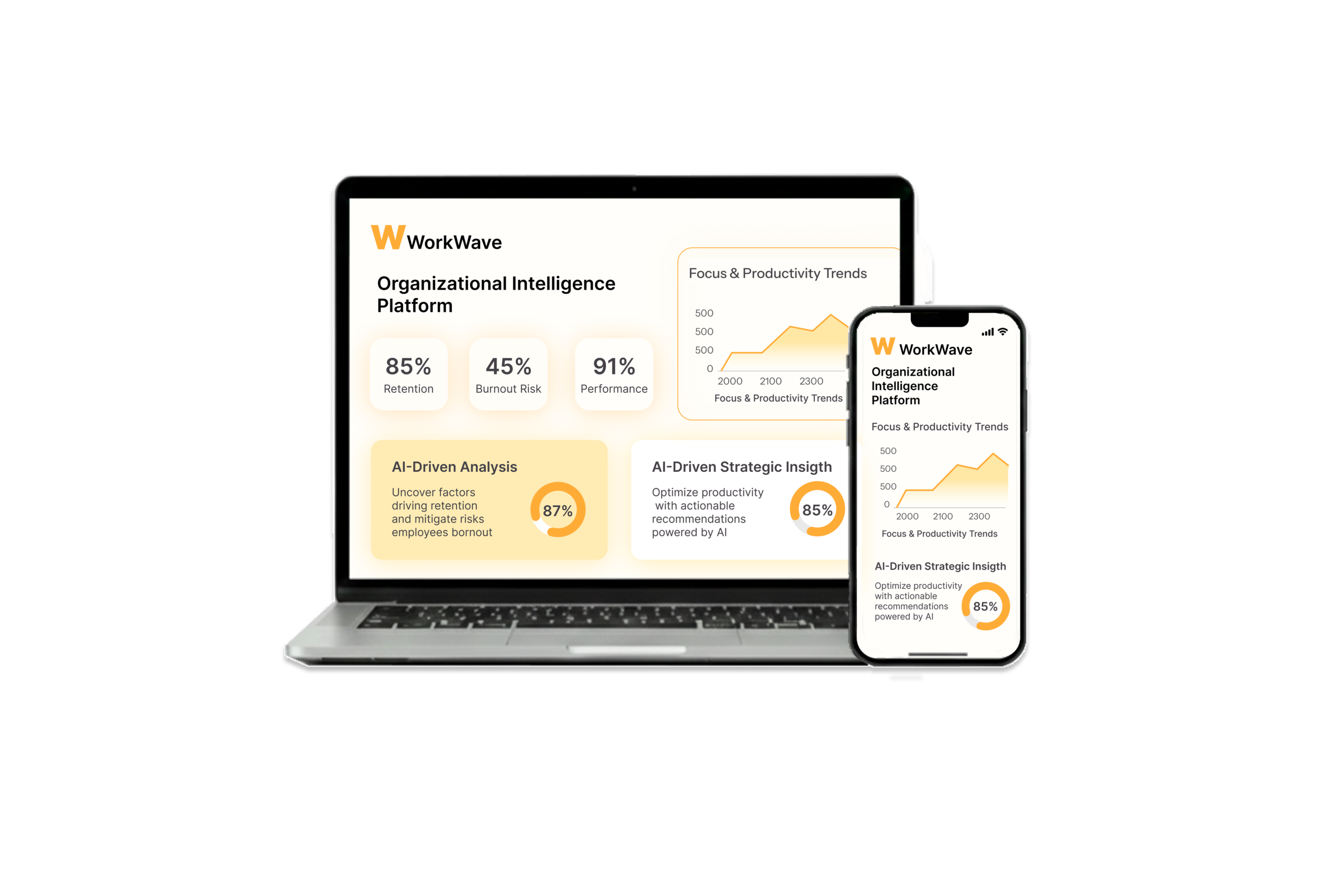
Problem
The design challenge was:
How might organisations understand team-level work patterns without turning behavioural analytics into employee surveillance or diagnostic scoring?

My Role
Behavioural analytics & UX-led concept design combining:
Behavioural insight · Human-centered UX · Information architecture · KPI framing · Ethical analytics
Key Decisions
Structured the concept around descriptive work patterns instead of individual assessment.
Explored relationships between meetings, focus time and workload patterns.
Positioned signals as information for exploration rather than deterministic predictions.
Outcome
Created an exploratory experience showing how team-level workload and focus information could be organised into clearer, more interpretable work-pattern views.
Decision Impact Summary
Key Insight
Behavioural information can support better conversations only when its limitations and context remain visible.
Decision Supported
Help teams identify workload and focus patterns worth discussing or investigating further.
Business Impact
Support more informed conversations around work rhythms and sustainable team practices.
UX Section
Work Pattern Experience & Information Architecture
WorkWave is structured into three executive-ready dashboard layers, each aligned with a specific organizational decision need.
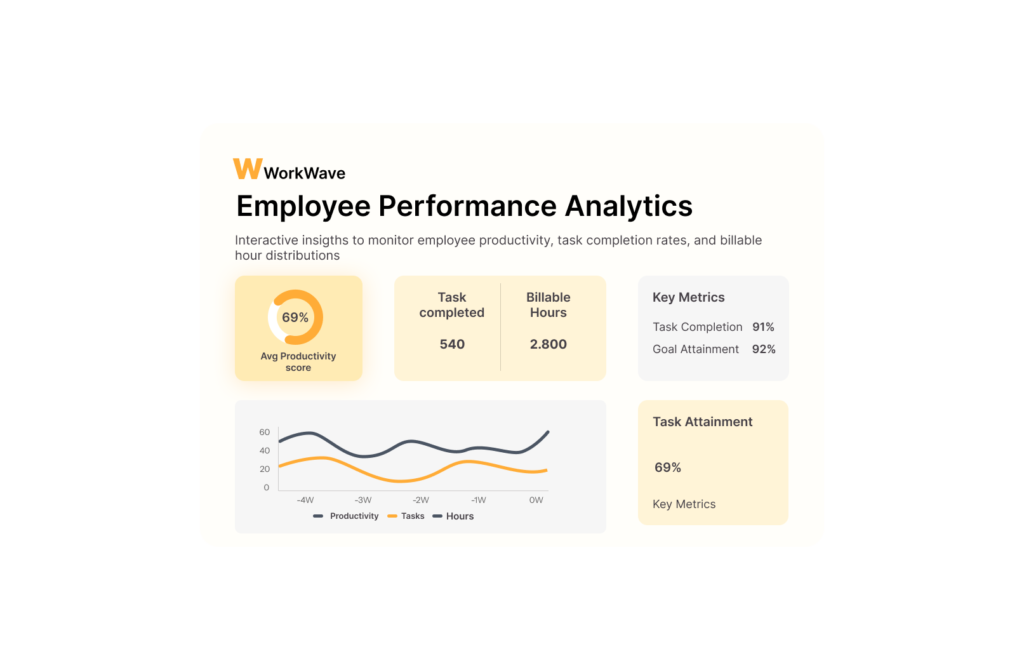
Overview — Recognize
Workload
Focus patterns
Team-level trends
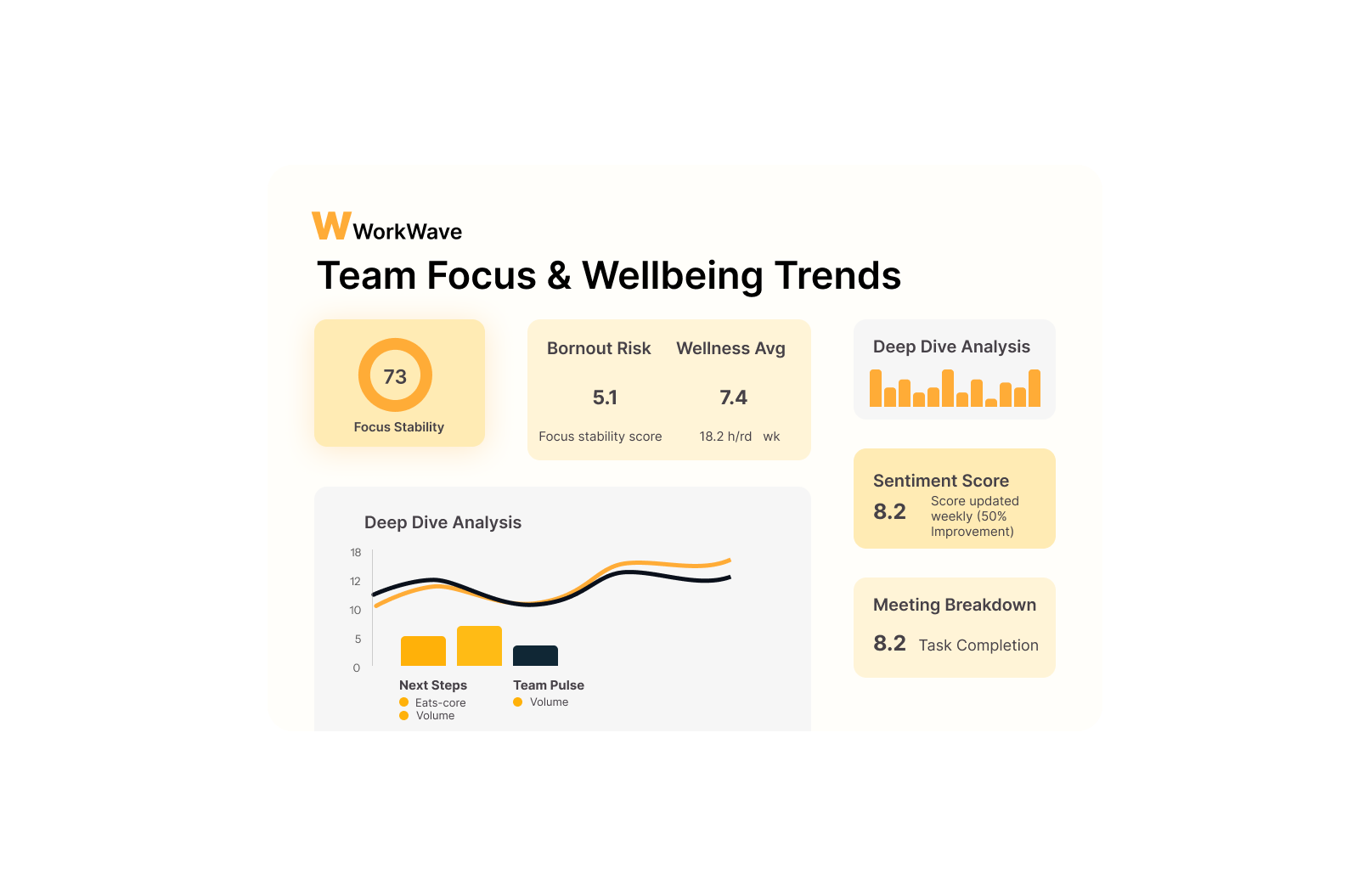
Workload & Focus — Understand
Meeting load
Focus time
Weekly patterns
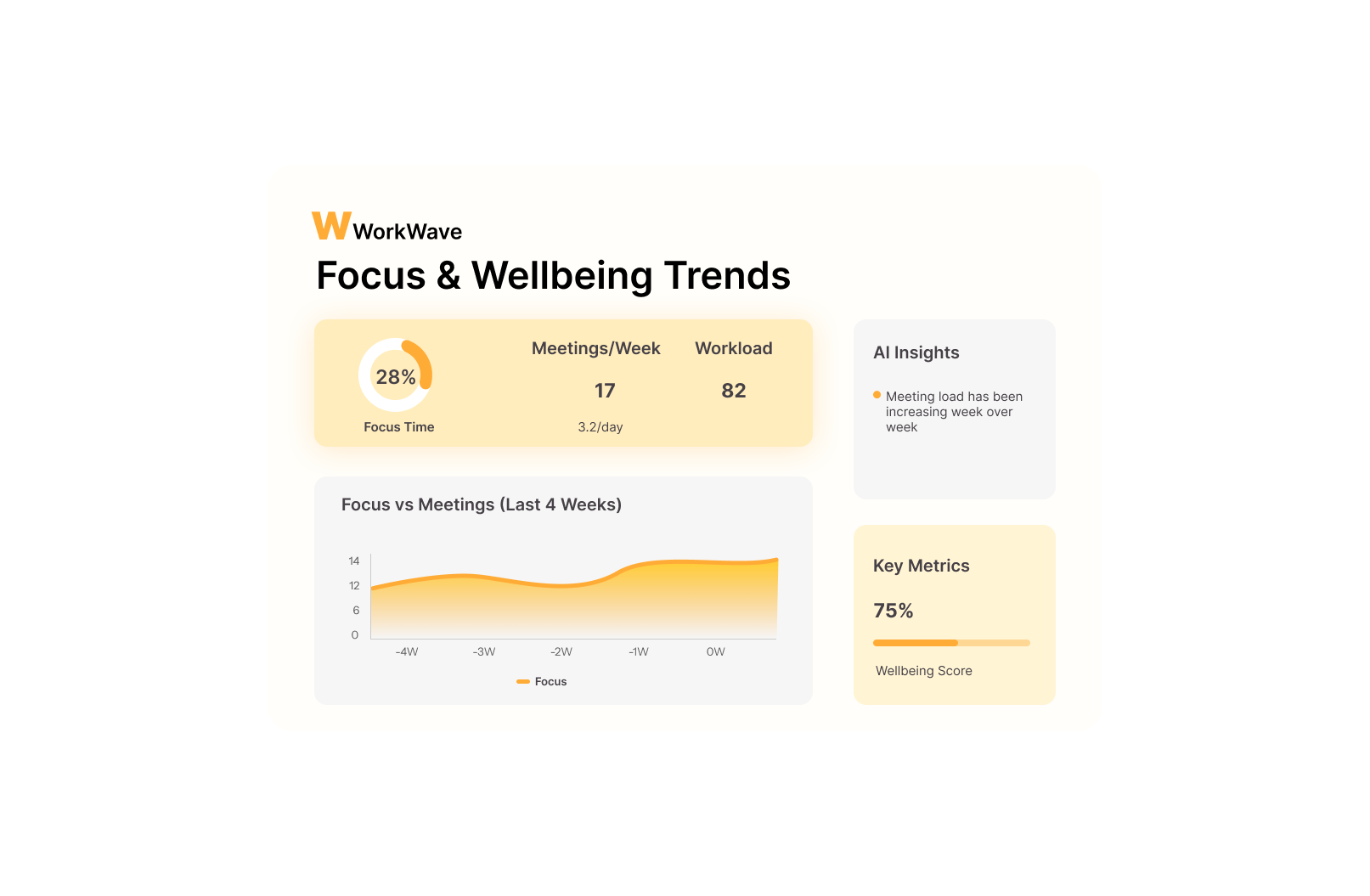
Trends — Explore
Long-term patterns
Workload evolution
Recurring signals
Why it matters
Demonstrates how behavioural thinking and UX can make organisational information more understandable while preserving a people-first approach.
Applicable contexts
Future of Work · Employee Experience · HR Technology · Behavioural Products
Extended case details available upon request.