
Fintech · Regulated SaaS · Product Governance
FlowPay — Making AI Governance Actionable
Context
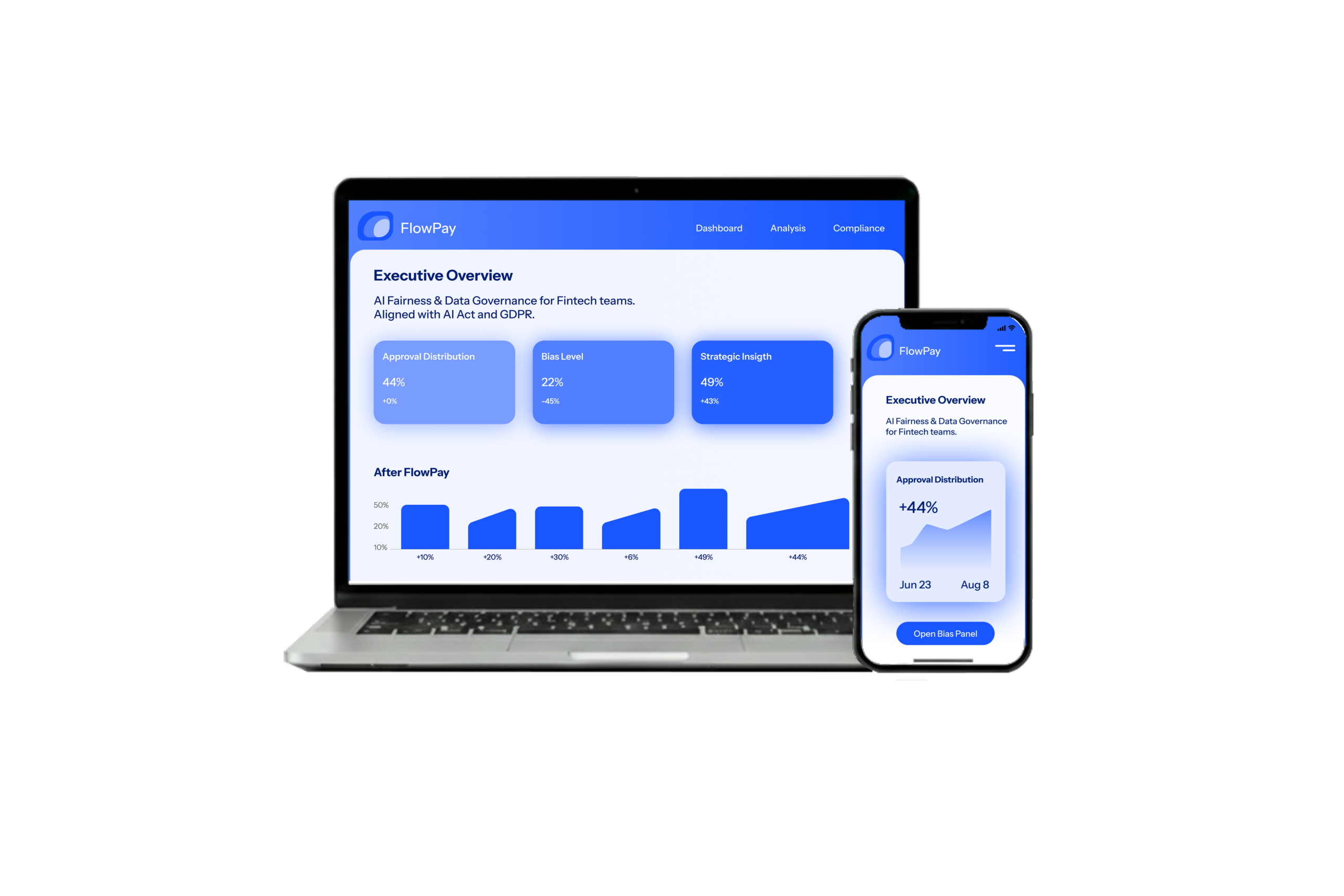
Regulated fintech environments require Product, Data, Risk and Compliance teams to understand not only model performance, but whether decisions remain fair, interpretable and aligned with governance requirements as data and models evolve.
Scope
Scenario-based case study using the public German Credit dataset.
Problem
Fairness and compliance information can become difficult to interpret when distributed across technical metrics, regulatory requirements and different stakeholder needs.
The challenge was to translate this complexity into clear signals that different teams could understand and act on.

My Role
Product analytics & UX-led concept design combining:
Requirements framing · KPI definition · Information architecture · Stakeholder-oriented UX · Responsible AI
Key Decisions
Structured information around the needs of leadership, data and compliance stakeholders.
Designed fairness and model signals around changes over time rather than disconnected one-off indicators.
Mapped responsible-AI and privacy considerations into understandable monitoring dimensions.
Outcome
Created a role-based governance concept translating technical and regulatory complexity into clearer stakeholder decision views.
The experience was structured to help technical and non-technical teams develop a shared understanding of model behaviour, fairness and governance questions.
Decision Impact Summary
Key Insight
Governance information becomes more useful when technical metrics are translated into role-relevant questions, trends and review points.
Decision Supported
Support Product, Data and Compliance stakeholders in identifying where model behaviour requires investigation, discussion or governance review.
Business Impact
Enable clearer cross-functional conversations by giving different stakeholders a shared, interpretable view of responsible-AI signals.
UX Dashboard
Stakeholder Experience & Information Architecture
FlowPay is structured into three role-relevant views, each aligned with a different governance and decision need.
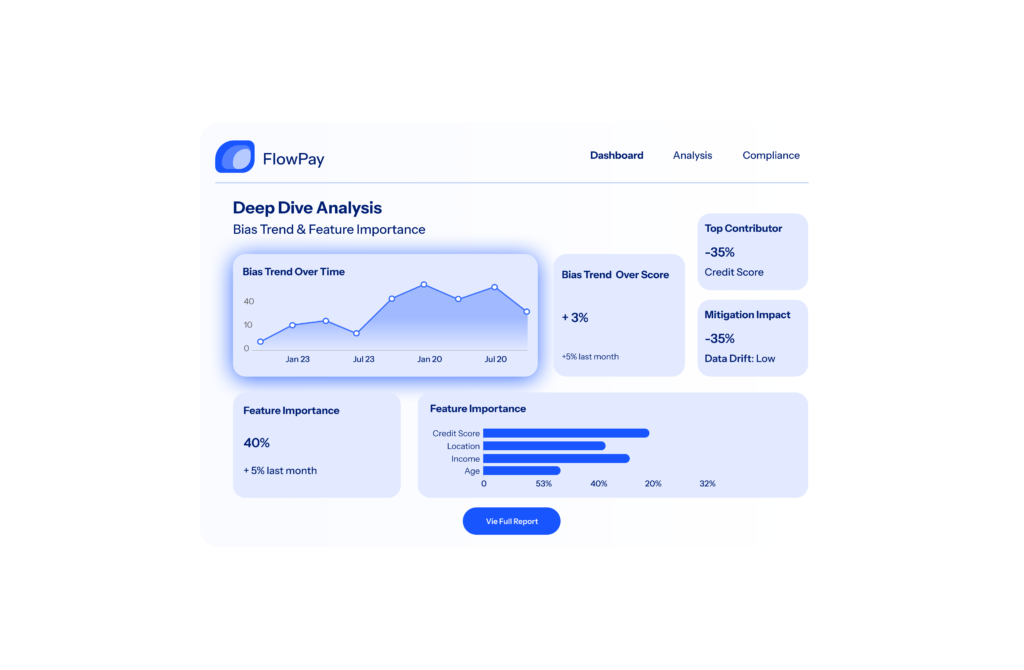
Product & Risk — Governance Overview
Fairness trends
Feature influence
Mitigation impact
Drift signals
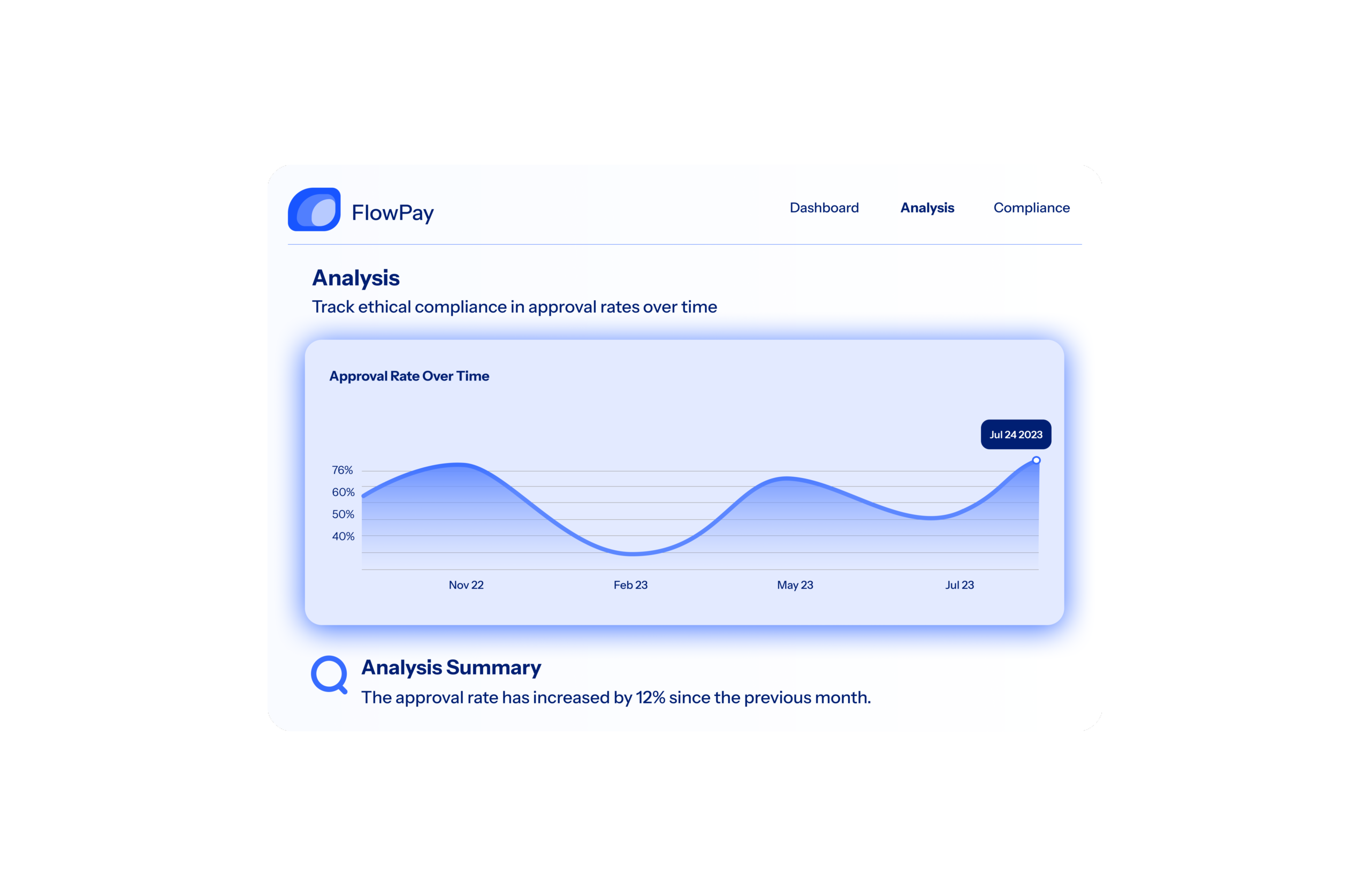
Data & ML — Decision Analysis
Approval trends
Fairness signals
Model changes
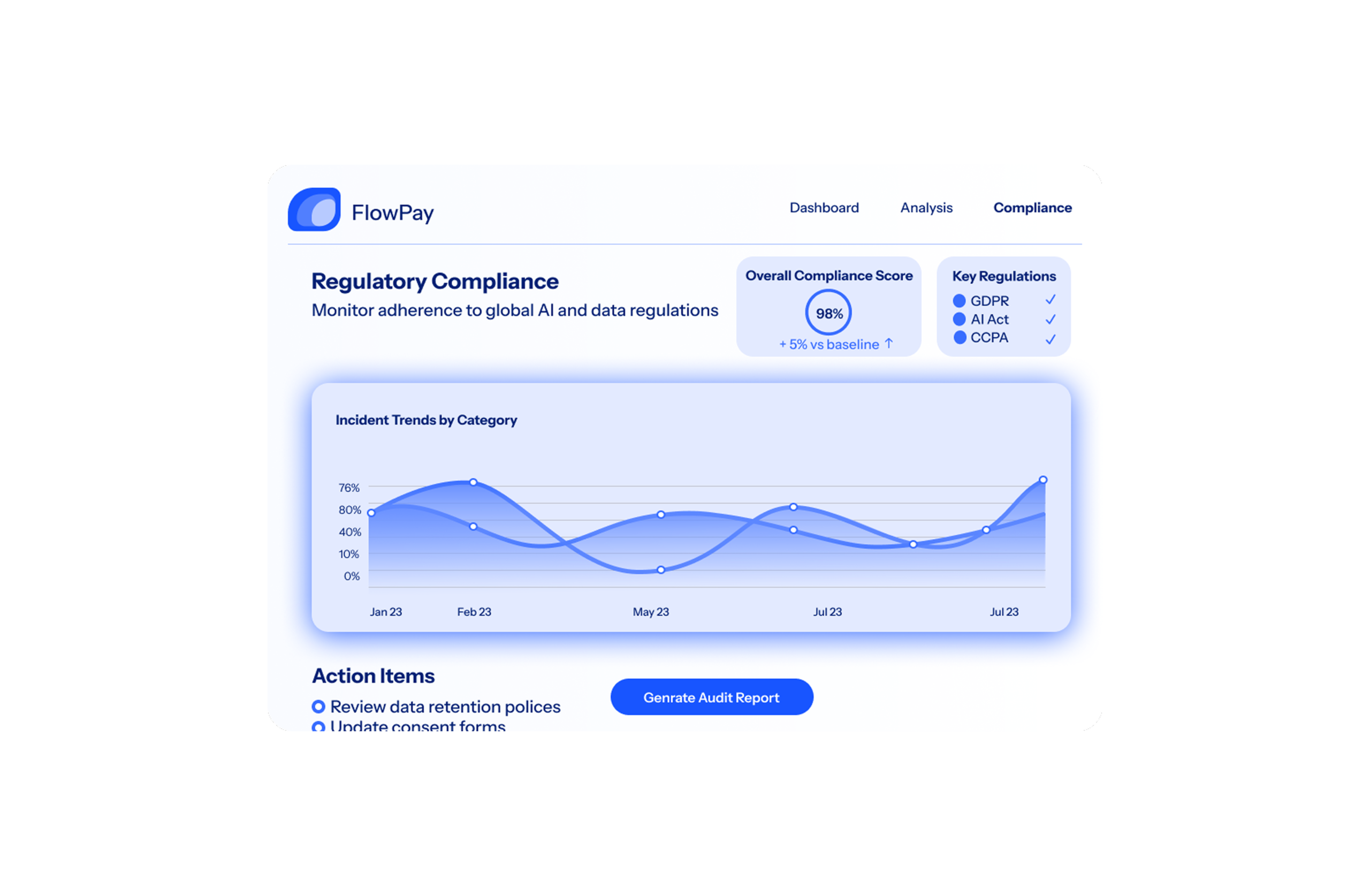
Compliance — Regulatory Alignment
Governance checks
Regulatory requirements
Incidents
Audit actions
Why it matters
Demonstrates my ability to translate complex technical and regulatory information into understandable experiences for different stakeholders.
Applicable contexts
Fintech · Responsible AI · Regulated SaaS · Enterprise Technology
Extended case details available upon request.